Each February, Stony Brook Medicine joins the national celebration of Black History Month by uplifting the stories, achievements and lived experiences of Black Americans whose work shapes our health systems, communities and shared future.
February is Black History Month, and this year’s theme, A Century of Black History Commemorations, recognizes the powerful contributions of African Americans in all sectors and encourages us to explore the impact and meaning of Black history and life commemorations in transforming the status of Black people in the modern world. As we reflect on this theme, the words of former U.S. Surgeon General Dr. Joycelyn Elders come to mind: "Health is more than absence of disease; it is about economics, education, environment, empowerment and community."
At Stony Brook Medicine, our goal is to strengthen, amplify and sustain efforts around eliminating health inequities by improving health outcomes and closing any gaps in healthcare disparities that have been rooted in historical injustices, biases and discrimination. This commitment to service and excellence is exemplified by the countless African Americans who have broken barriers and driven innovation in healthcare and medicine. From nurses and physicians to researchers and educators, their contributions have advanced progress made toward a more compassionate and equitable healthcare system.
Black Men in White Coats
At Stony Brook Medicine, Black Men in White Coats is focused on opening doors and expanding opportunities for students who may not always see themselves represented in healthcare. In collaboration with the Renaissance School of Medicine and community partners, Black Men in White Coats works to address the longstanding underrepresentation of Black men in medicine by creating visible role models. Through mentorship, exposure and hands-on experiences such as youth summits, the initiative helps young people envision futures as physicians, scientists and other health professionals.

Morning Grounds, Morning Rounds: A Conversation with Raymond Uduba
A Black History Month Message from Dr. Wertheim
February is Black History Month, and this year’s theme is “A Century of Black History Commemorations,” celebrating 100 years of the foundation of Black History Month, growing from the work of historian Carter G. Woodson. This month — and always — we recognize the powerful contribution of African Americans in all sectors, and explore the impact and meaning of Black history on our world today, especially in modern medicine.
From Dr. Rebecca Lee Crumpler, the first Black woman to receive an MD in the United States in 1864, to Dr. Charles Richard Drew, the “father of blood banking” who broke ground on blood preservation techniques, to Dr. Joycelyn Elders, the first African American to serve as US Surgeon General, we are grateful to the Black Americans who have broken barriers and paved the way for others, all while saving lives and changing healthcare for the better.
Advancing Health Equity
OUR COMMITMENT TO EXCELLENCE
At Stony Brook Medicine, we honor the legacy of Black pioneers by continuing their work toward a more equitable and inclusive healthcare system.
- Diversity and Inclusion
Fostering a diverse workforce that reflects the communities we serve and creating an inclusive environment where all voices are heard and valued. - Health Equity
Working to eliminate health disparities and ensure equitable access to quality healthcare for all patients, regardless of race, ethnicity or socioeconomic status. - Education and Mentorship
Supporting the next generation of diverse healthcare professionals through scholarships, mentorship programs and educational opportunities. - Community Engagement
Building strong partnerships with our community to address health challenges and improve outcomes for underserved populations.
Pioneers in Medicine
Celebrating the remarkable achievements of some of the Black medical pioneers who transformed healthcare and paved the way for future generations.
Dr. Charles Drew
1904-1950
Pioneer in blood banking and transfusion
Developed improved techniques for blood storage and established large-scale blood banks during World War II, saving countless lives.
Dr. Rebecca Lee Crumpler
1831-1895
First Black American woman physician
Overcame tremendous barriers to become the first Black woman to earn a medical degree in the United States in 1864.
Dr. Daniel Hale Williams
1856-1931
Pioneer in open-heart surgery
Performed one of the first successful open-heart surgeries in 1893 and founded the first Black-owned hospital in America.
Dr. Jane Cooke Wright
1919-2013
Pioneer in cancer research and chemotherapy
Pioneered the use of chemotherapy and developed innovative techniques for testing the effects of drugs on cancer cells.
Dr. Patricia Bath
1942-2019
Inventor of laser cataract treatment
First African American woman doctor to receive a patent for medical invention, revolutionizing eye surgery and restoring sight to millions.
Dr. Ben Carson
1951-present
Renowned neurosurgeon
Internationally recognized for his work in pediatric neurosurgery, including the first successful separation of conjoined twins joined at the head.
2026 Events
Feb
26
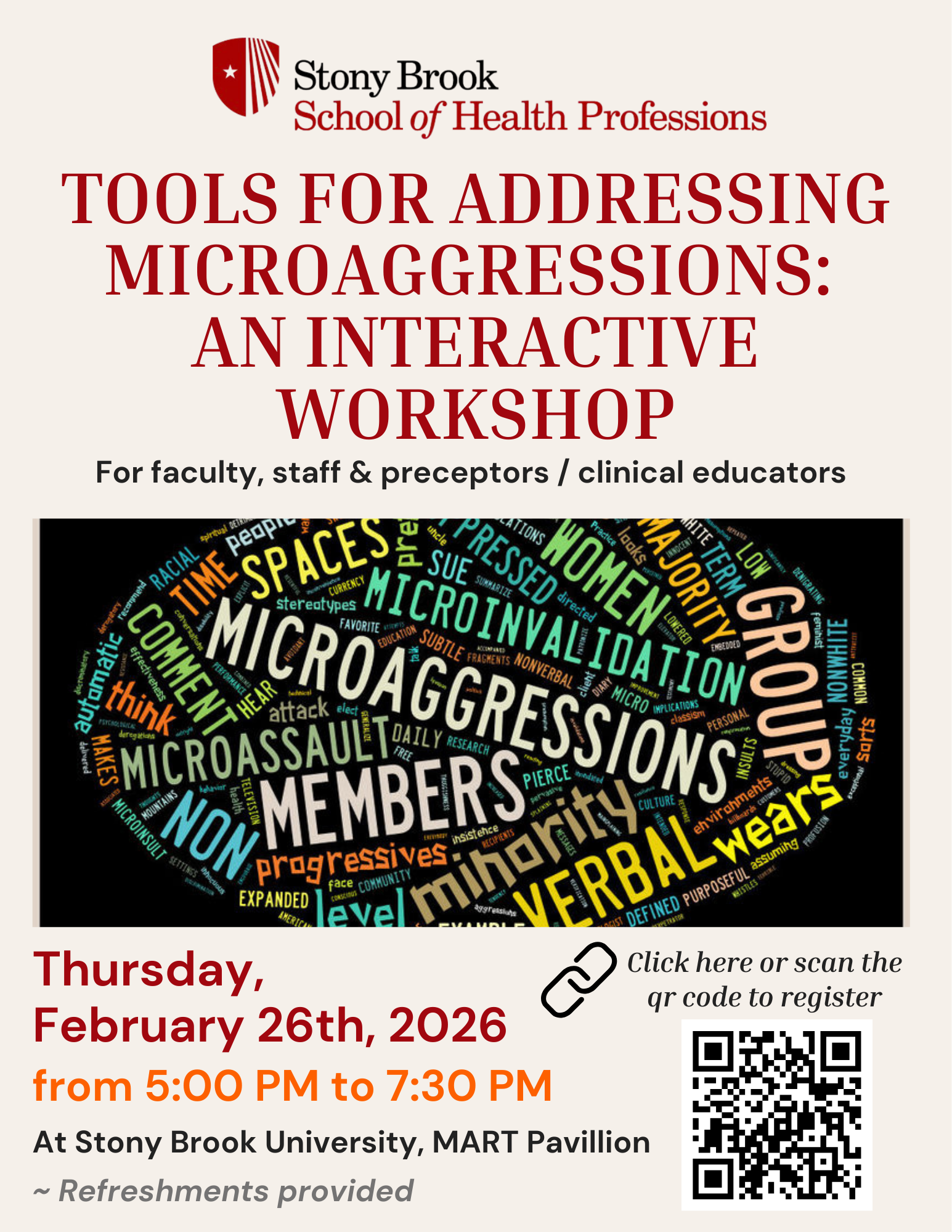
Managing Microaggressions in the Clinical Setting Workshop
Thursday, February 26, 2026
5:00 - 7:30 PM
Stony Brook MART Pavillion
Primary Faculty: James Pierre-Glaude, EdD, PT, DPT, ATC, CSCS
Sponsors:
Stony Brook University School of Health Professions and Association of Schools Advancing Health Professions (ASAHP)