

Colorectal cancer is the second leading cause of cancer-related deaths in the United States, but early detection through screening can significantly improve survival rates. Screening beginning at age 45 is recommended for most adults to catch the disease in its early stages or prevent it altogether by identifying precancerous polyps.
Risk Factors:
The following factors may increase your risk for colorectal cancer or make you eligible for colon cancer screening:
- Age 45 or older
- Family or personal history of colorectal cancer or polyps
- History of inflammatory bowel diseases like Crohn's disease or ulcerative colitis
- Genetic conditions such as Lynch syndrome or Familial Adenomatous Polyposis Syndrome (FAP)
- Sedentary lifestyle, obesity or a diet high in processed foods
- Smoking or heavy alcohol use
Symptoms:
Colorectal cancer often develops without symptoms, particularly in the early stages. However, signs and symptoms to watch for include:
- Rectal bleeding or blood in the stool
- Changes in bowel habits, like diarrhea or constipation
- Abdominal cramping or pain
- Unexplained weight loss or fatigue
- Anemia, particularly iron deficiency anemia
If you notice any of these signs or symptoms, consult your healthcare provider promptly.
Screening:
Our FAST TRACK Screening Colonoscopy Program makes it easy to get screened. Healthy individuals aged 45 and older can schedule a colonoscopy directly, without needing a prior consultation with a gastrointestinal specialist.
Learn More From Our Experts
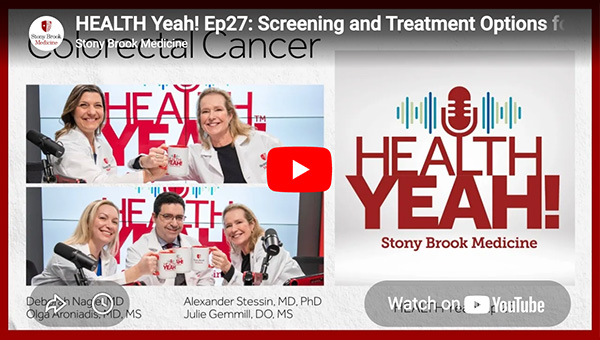
Screening and Treatment Options for Colorectal Cancer
Join experts from Stony Brook Cancer Center for an informative conversation about colon and rectal cancer screening, diagnosis and advanced treatment options.

Colon Cancer Screening: Prevention, Early Signs and Why Screening Matters at Every Age
Screening can prevent cancer or catch it early, when treatment works best. This article will explore the role of screening, risk factors, symptoms to watch for and how timely action can save lives.

How Long Does a Colonoscopy Take? And Other FAQs
Learn answers to frequently asked questions and gain a better understanding of what to expect during a colonoscopy—insights from our experts designed to help put your mind at ease.