
Lung cancer is the leading cause of cancer deaths in the United States, yet early detection can significantly improve survival rates. When discovered in its earliest stage, survival rates can reach up to 90 percent.
Risk Factors:
Individuals at high risk for lung cancer and most likely to benefit from screening include:
- Adults aged 50 to 80
- Current or former smokers with a history of smoking 20 pack-years or more
- Those who quit smoking within the past 15 years
Understanding these factors can help assess your eligibility for screening.
Symptoms:
Early-stage lung cancer often has no symptoms. When symptoms do appear, they may include:
- Persistent coughing or changes in a chronic cough
- Shortness of breath
- Chest pain
- Unintended weight loss
If you experience any of these, it’s important to consult with your healthcare provider.
Screening:
Our lung cancer screening program offers annual low-dose CT scans to eligible individuals. This quick, non-invasive scan is highly effective in detecting lung cancer early, when it’s most treatable. Each case is reviewed by a team of nationally recognized lung cancer specialists to ensure the best care.
Learn More From Our Experts
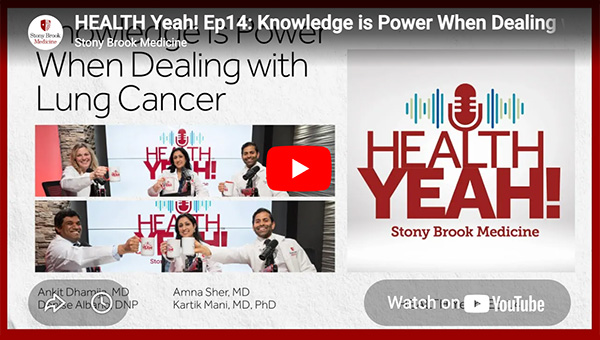
Knowledge is Power When Dealing with Lung Cancer
Join experts from Stony Brook's Lung Cancer and Chest Disease Center, for an informative conversation about lung cancer screening, diagnosis and advanced treatment options.

Lung Cancer Screening Guidelines
Screening can prevent cancer or catch it early, when treatment works best. This article will explore the role of screening, risk factors, symptoms to watch for and how timely action can save lives.