

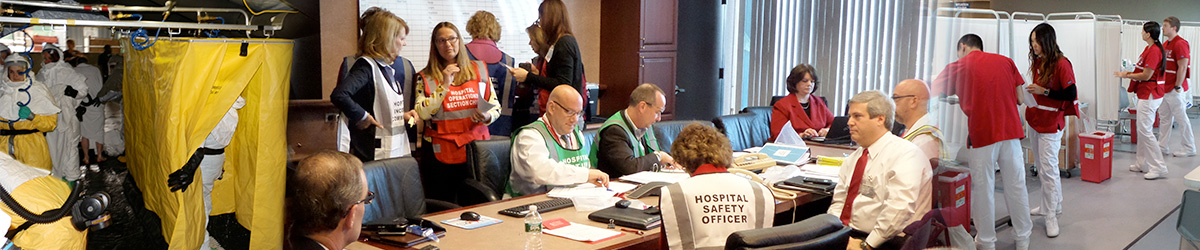
The National Domestic Preparedness Consortium (NDPC) is a major training partner of the U.S. Department of Homeland Security/Federal Emergency Management Agency (DHS/FEMA) National Preparedness Directorate. The NDPC is congressionally mandated to support the DHS/FEMA National Preparedness Directorate by developing and delivering high-quality, all-hazards training that enhances the Nation’s long-term preparedness goals. The NDPC is the principal means through which the Directorate increases the capability of states, local and tribal jurisdictions and territories to prevent, protect, mitigate, response to and recover from terrorism, natural disasters, catastrophic accidents and other hazards. The National Preparedness Directorate supports and implements:
- Presidential Policy Directive – 8
- Presidential Policy Directive - 21
- Executive Order 13636 - Critical Infrastructure and Cybersecurity
- National Incident Management System
- National Preparedness System
- National Response Framework
- National Preparedness Goal
- National Infrastructure Protection Plan
The NDPC is comprised of seven nationally recognized organizations in the field of homeland security and emergency response training. Each member addresses the urgent need for counter-terrorism preparedness of the nation’s emergency first responders within the context of all-hazards – natural or manmade – including chemical, biological, radiological, nuclear, and explosive (CBRNE) Weapons of Mass Destruction (WMD). All NDPC members are committed to provide quality, cost-effective counter-terrorism training to the nation’s emergency responders. Each institution focusses on developing and delivering services according to their institutional base of expertise. Under this arrangement, the consortium has achieved remarkable results in the nation’s unified effort to bring all levels of government, business, and the emergency response community to new degrees of preparedness. Together these members collectively assist in preventing, protect against, respond to, and recover from incidents of national significance. The seven consortium members include:
- Center for Domestic Preparedness in Anniston, Alabama
- New Mexico Institute of Mining and Technology (New Mexico Tech)
- Louisiana State’s National Center for Biomedical Research & Training/Academy of Counter-Terrorist Education
- Texas A&M Engineering Extension Service’s National Emergency Response & Recovery Training Center
- Department of Energy’s Nevada Test Site
- Transportation Technology Center, Inc.
- National Disaster Preparedness Training Center at the University of Hawaii
Since its establishment by Congress in 1998, the NDPC has delivered rigorous, targeted preparedness training in all 50 states, five U.S. territories, and the District of Columbia, helping jurisdictions achieve their goals of protecting citizens, property and economic livelihood. Millions of responders at every level have benefited from this comprehensive and coordinated training. Each year, the consortium’s programs meet the training and education needs of tens of thousands of emergency responders and state, local, and tribal government employees and officials. The NDPC applies its expertise in academics, curriculum development, eLearning, and adult instructional techniques to produce DHS/FEMA-certified training courses that address the most critical needs of the emergency response community.
“The goal of the consortium is to provide a threat-responsive, long-term national capability. This capability will be attained through weapons of mass destruction emergency first responder training, test and exercise programs.”
—House Report 105-825, 1998